

What happens when the title is gone?
For decades, you led. You drove results, made decisions, and built something that mattered. Your work defined your mornings, filled your calendar, and told the world and you who you were.
Then came retirement. And nobody warned you about this part.
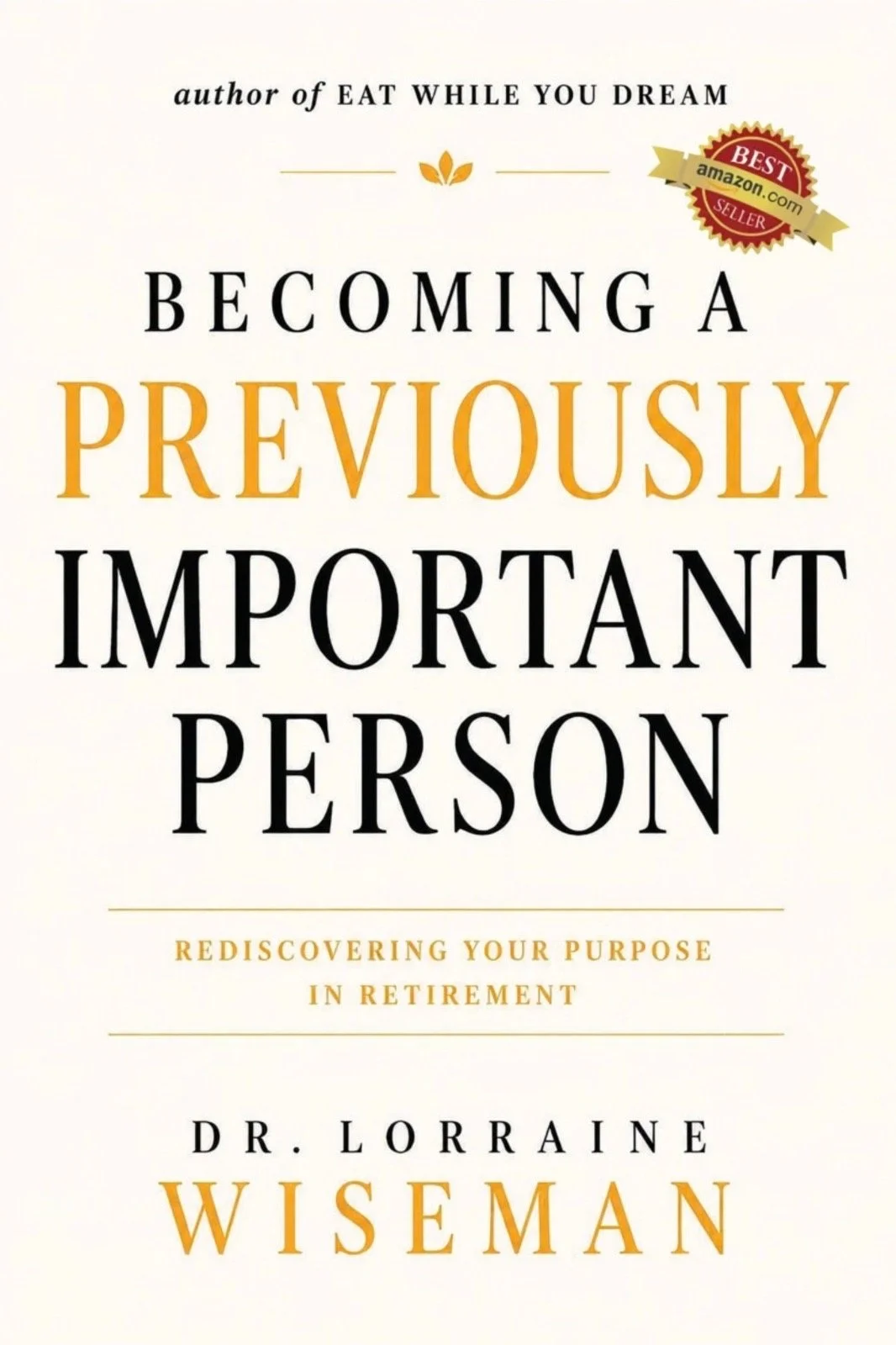
In Becoming a Previously Important Person, executive coach and PhD researcher Dr. Lorraine Wiseman gives voice to the experience millions of high-achievers face but rarely admit: that leaving a career can feel like losing yourself. Not because something went wrong, but because no one prepared you for the psychological side of this transition.
Drawing on her doctoral research, thirty years leading seven publicly traded companies across six countries, and her own deeply personal journey out of corporate life, Dr. Wiseman offers a practical, compassionate framework for what comes next. You will learn to:
Understand the five phases of retirement transition, and why identity loss is the one nobody talks about
Separate who you are from what you did, and build something even more meaningful
Rebuild your social world with intention, not just habit
Reconnect with purpose and channel your strengths in a new direction
Design a retirement that actually fits the person you've become
This is not a book about leisure. It is a book about reinvention for the leaders, executives, and driven professionals who refuse to simply stop.
You were important then. You still are. This book shows you how to live like it.
“In her roles as business leader and President, Lorraine has excelled at building shared visions and creating positive and commercially powerful change. She brings a positive energy to all things and people around her.”
—A. TAYLOR, BUSINESS EXECUTIVE – U.K.
JOIN OUR COMMUNITY
Are you ready to become a {previously important} person?
Reading the book is only the beginning. Join the Previously Important People newsletter, where we have the difficult conversations around this topic.
Get ahead of retirement with a strategy and resources.

DR. LORRAINE WISEMAN
MBA, CPA, President and CEO of Leading the Wise Way
Lorraine is a Global Executive and has been the President of seven multinational corporations in six countries. She is an expert in business turnarounds.
She currently coaches 50 CEO’s of companies ranging in size from $1 million to $750 million.
“I’m writing this book because I’ve seen so many people enter retirement feeling lost rather than excited. After dedicating decades to careers, they expect these to be their “golden years”—but after a few months of relaxation, many find themselves wondering, “What’s next?” It’s not just about filling time; it’s about facing a true identity shift.
For many, retirement brings an unexpected sense of emptiness, even a crisis of purpose. They’ve achieved financial security and prominence, but they don’t want to spend every day on the golf course; they want to feel useful. I believe we need a paradigm shift—a new way to think about retirement that focuses on well-being and fulfillment, not just leisure. My hope is to spark conversations that help us redefine what retirement can really mean.”
consider this…
The Boomers are retiring.
Are they ready? Are you? What can be done to support their well-being in retirement?
According to the statistics, $41.4 million people will be of retirement age; 25% of those people will be depressed within their first year. What is the role of the organization to support psychological preparation for retirement?
Lost and alone: the vital role of human connection in retirement.
We are not meant to be alone. When individuals whose social connections revolve around work and they decide to retire, there is an abrupt end to connection. Retirees are isolated and detached. They are alone.
Volunteerism: being fulfilled or filling time in retirement.
Many retirees describe the experience as being lonely. After spending 40 hours a week with co-workers, many try to fill the void by volunteering with local charities. But it doesn’t fill the gap. Without purpose or a deep connection with the organization, volunteering fills time but fills time.